

Defining Favourites: Fires on the Plain (1959)
Kon Ichikawa returns to the battlefield to bring forth a harrowing tale of survival during WWII.

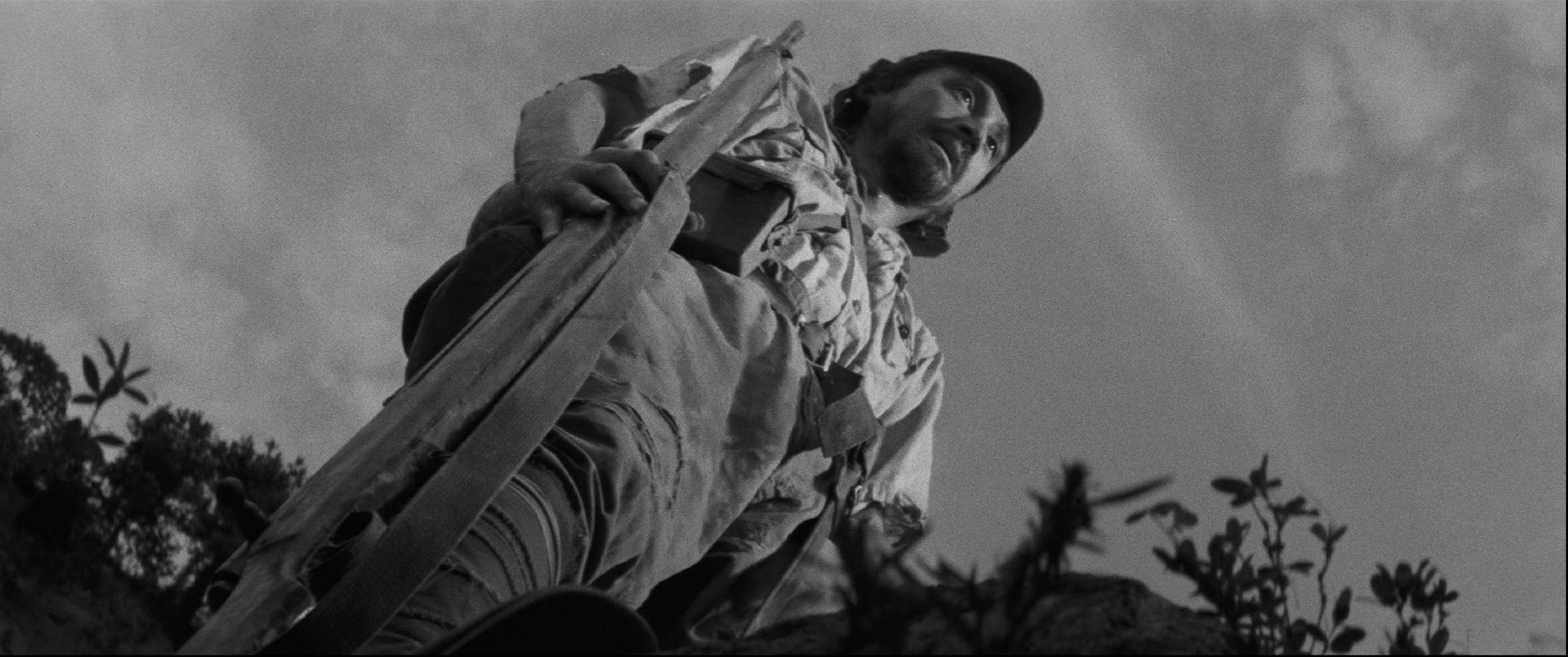
Welcome to my Defining Favourites, a section dedicated to essays about films that I feel confident in calling favourites in some way or another — akin to Roger Ebert’s “Great Movies” reviews. These essays are for paid subscribers, so if you would like to read more beyond the free preview, please consider subscribing.
Directed by Kon Ichikawa
Screenplay by Natto Wada, from the novel by Shohei Ooka
Produced by Masaichi Nagata
Starring Eiji Funakoshi, Osamu Takizawa, Mickey Curtis
Premiere Date: November 3, 1959
Running Time: 108 minutes
The first image of Kon Ichikawa’s Fires on the Plain tells you everything that you need to know about this film’s portrait of life on the battlefield. Said image is of its protagonist Tamura, being slapped in the face, and reminded that he is nothing more than a liability to his fellow soldiers. The Japanese war effort is already doomed, and many soldiers want to return home just to feel as if their lives will not have been wasted in vain. This need to survive is what fuels Ichikawa’s view of the war, especially when there is no hope that the country will be able to properly recover from something so devastating. Yet, that doesn’t ever stop Tamura from holding onto his dear life, mainly because he has nothing else to offer.
So begins one of the most harrowing World War II films ever made. We’re sticking with Tamura trying to survive in Leyte, an island in the Philippines about to be liberated by the Allies. For Tamura, everything we’re seeing here seems so unfamiliar, and communication with other soldiers is futile. The most that Tamura would be able to do is to stick it out until he’s either left to die alone, or the unlikely chance that fellow troops would be out there, who would potentially rescue him. In Fires on the Plain, that would be the best case scenario, but Kon Ichikawa leaves us to confront the reality of fighting for a doomed cause. Coming from author Shohei Ooka’s experience as a prisoner of war in the Philippines, the film Ichikawa makes is no less gruelling, given how much time protagonist Tamura spends isolated from people he can properly communicate with.
